
Benjamin Franklin Roberts (1815 – 1881)Abolitionist, Civil Rights Activist, an 1850’s Somerville Resident
with contributions by Ronnisha Walton
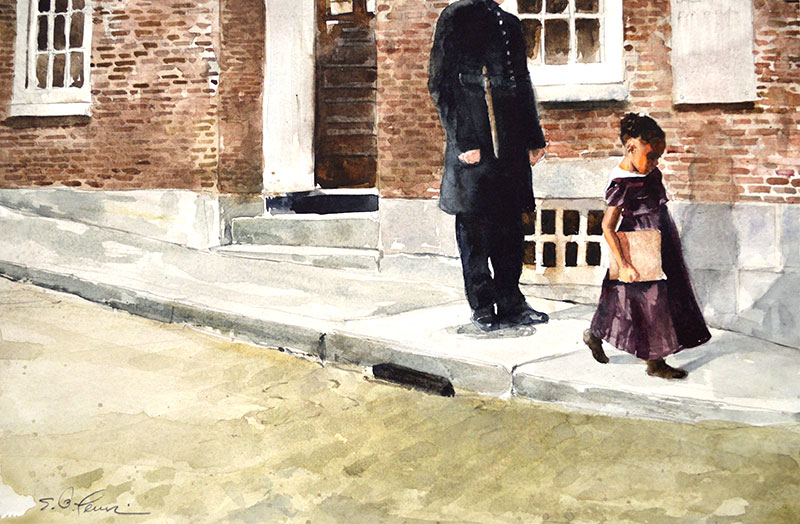
Artwork by E. B. Lewis from the picture book, The First Step: How One Girl Put Segregation on Trial as cited on the Zinn Education website.
The family of Benjamin Franklin Roberts—an abolitionist printer and the first African American to edit, publish, and produce a newspaper (The “Anti-Slavery Herald”) in the United States—lived in Somerville at 14 Alston Street. Before moving to Somerville, the Roberts family lived in Boston on the North Slope of Beacon Hill, a diverse neighborhood home to radical abolitionists, while conservative “Boston Brahmins” lived on the South Slope.
179 years ago on February 15th, 1847, Benjamin Roberts applied for his four-year-old daughter, Sarah, to attend the school closest to her home near the docks in the North End, that was only educating white children. He requested four times, and each time his request was denied. Roberts was following in the footsteps of this grandfather, James Easton, a revolutionary soldier who declined to classify himself by the racial categories defined by whites.
Every day, Sarah would have to walk past five white public schools through the cold, windy streets, just to get to the only Black school, the Smith School.
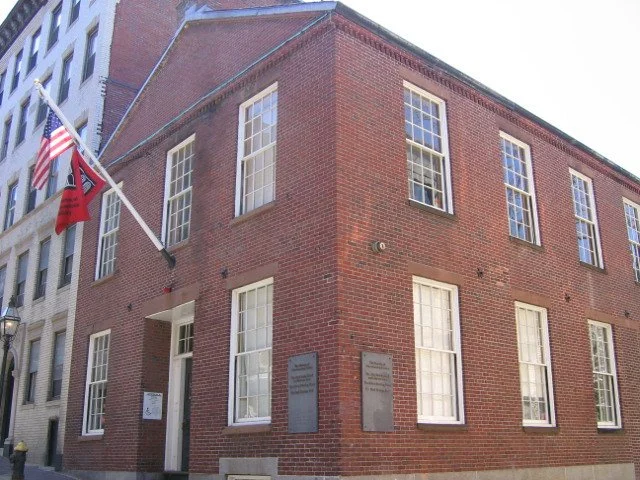
The Abiel Smith School
Roberts hired Robert Morris, the twenty-four-year-old prodigy who had just defeated a white lawyer in court to become the first Black attorney to win a jury case in America. Recognizing the monumental task, Morris secured the help of the towering white abolitionist and famed orator, Charles Sumner, who resided on the North Slope. Roberts’ attempt at school choice became the 1848 court case Sarah Roberts vs. Boston, argued by Charles Sumner and Robert Morris.
The court ruled against them and upheld racial segregation in schools, laying the foundation for “separate but equal”. But this decision prompted boycotts, demonstrations and petitions and when Roberts brought the case to the state legislature 1855, he finally prevailed, and the court passed a law forbidding segregation in Public Schools.
The “separate but equal “doctrine from the Sarah Roberts vs. Boston case won out again In 1896, when United States Supreme Court cited it in the Plessey vs. Ferguson decision that legalized segregation throughout the country. But Roberts case was also cited, when the Supreme Court overturned the segregation decision in Brown v. Board of Education, which propelled the emergence of the modern civil rights movement.