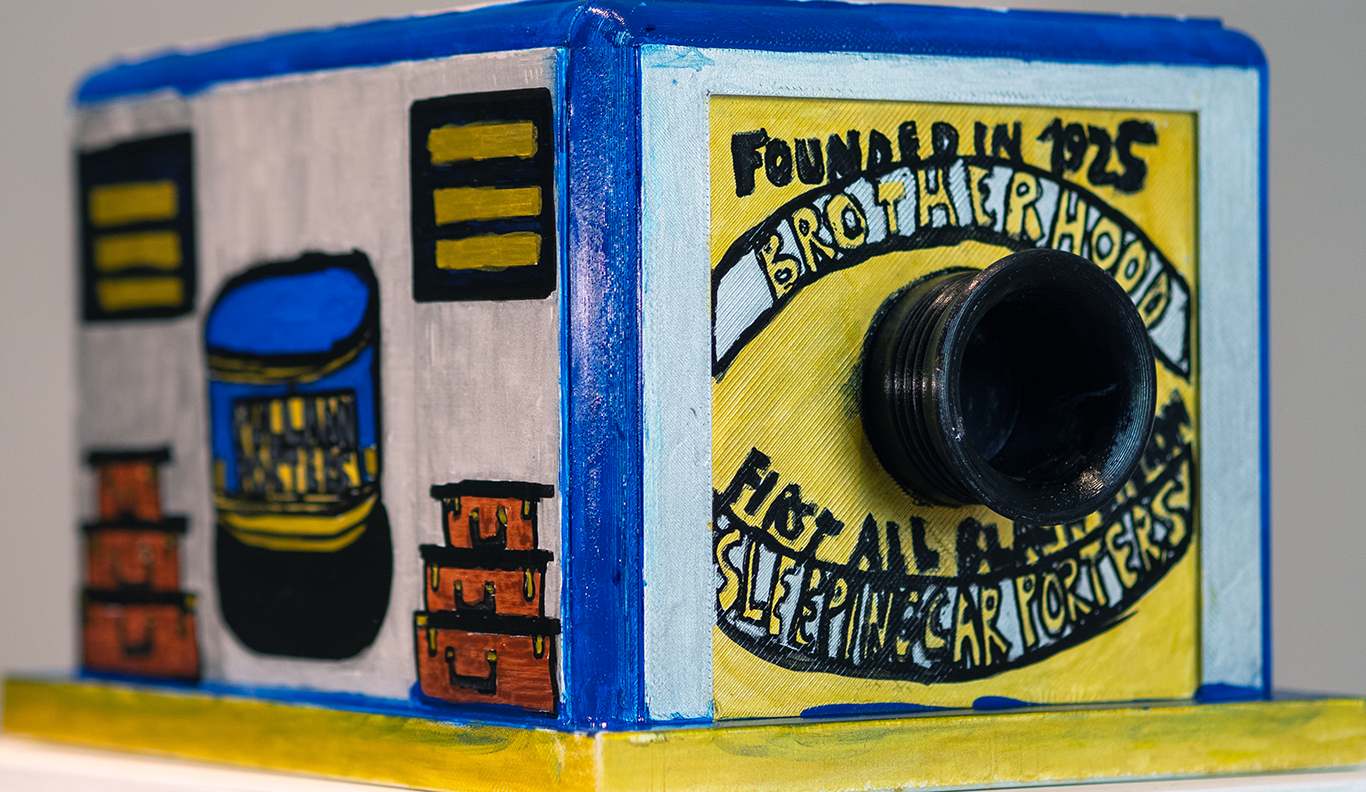
12 - PULLMAN PORTERS: Pioneers of Black Labor and Civil Rights
Listen!
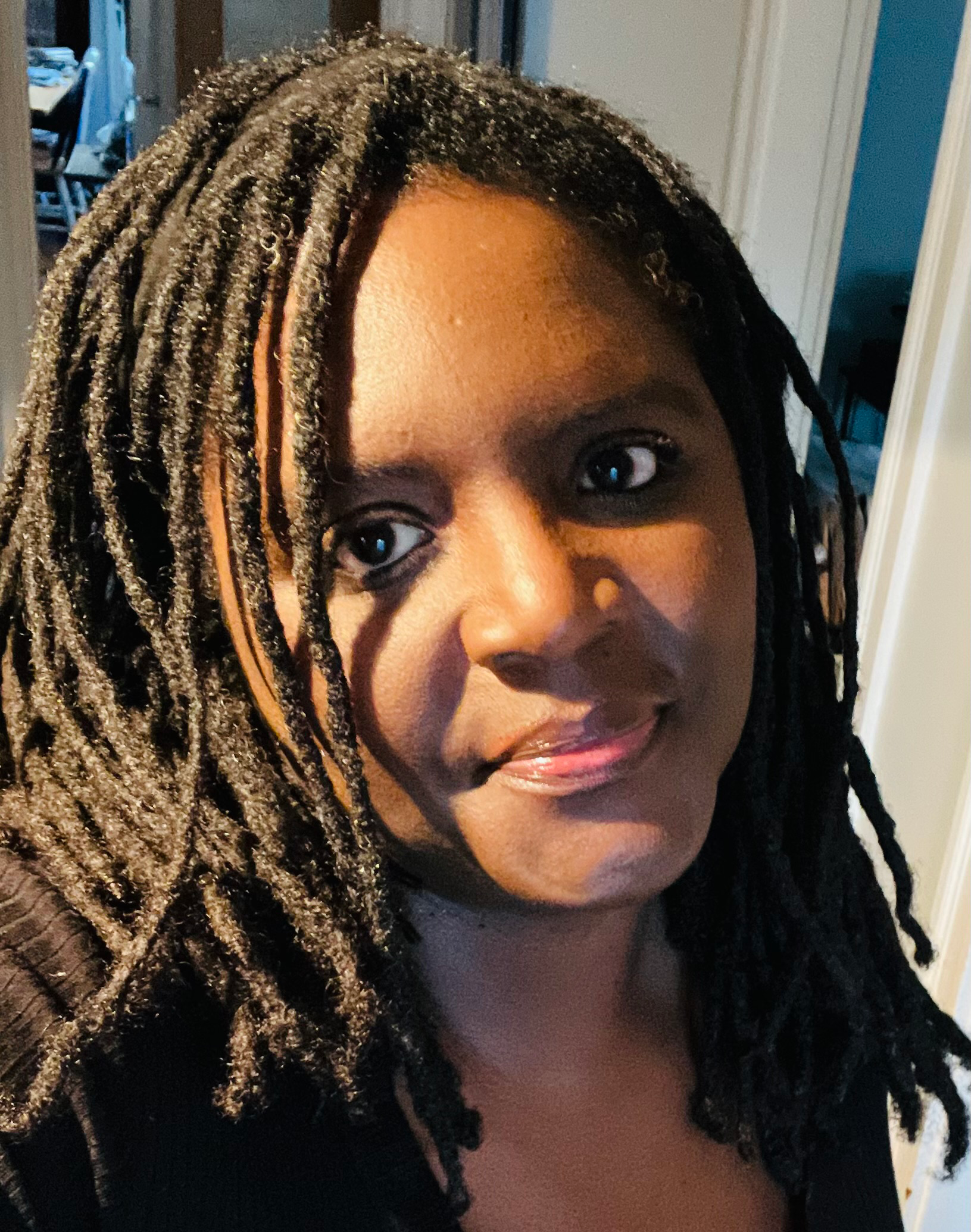
Tori Weston
Working on this project introduced me to a history of Somerville I didn't know existed.
My goal with the phone box is to highlight not only the neighborhoods that were home
to Pullman Porters, a significant part of the rising black middle class in Somerville, but also how their labor union, the Brotherhood of Sleeping Car Porters, and a young MLK, Jr., debuting his now iconic sermon "What is Man," was a building block to the March on Washington. Hopefully, this collage-style design will excite people to learn more.
Historical Background
The Pullman Porters, most of them formerly enslaved or the sons of enslaved people, became pillars of dignity and perseverance. They set the gold standard f
or service while enduring low wages, long hours, and routine racism. George Pullman intentionally hired Black men, believing they would work cheaply and remain “invisible” to white passengers. “He was looking for people who had been trained to be the perfect servant,” said historian Larry Tye, Rising from the Rails: Pullman Porters and the Making of the Black Middle Class. Yet despite this exploitative model, these jobs provided rare opportunity, making Pullman the largest Black employer in the country and fueling the rise of a Black middle class
In the face of widespread discrimination, a strong black community rose in this area close to the Boston & Maine Railroad lines. Boston area Pullman porters started organizing themselves and joined others in New York who tapped Randolph in Harlem to lead them.
In 1925, under the leadership of A. Philip Randolph, porters formed the Brotherhood of Sleeping Car Porters—the first Black labor union in the U.S. They fought for and won higher wages, shorter hours, and union representation. Randolph was the most important civil rights and labor unionist of his time and forced Franklin D Roosevelt to desegregate defense industry jobs, and Harry Truman to end discrimination in federal hiring and racial segregation in the armed services. A larger-than-life statue of Randolph stands in Back Bay Station in Boston.
In 1954, Dr. Martin Luther King Jr. delivered a sermon, “What Is Man?”— at a Pullman Porters’ memorial in Cambridge—affirming their moral purpose and humanity. Dr. King's message, along with the porters' experiences, likely reinforced their commitment to both labor and civil rights causes, linking local activism with a national justice movement.
Larry Tye calls the Pullman Porter, “the most influential black man in America for the hundred years following the Civil War.”
Tori Weston
Tori Weston is a writer/artist living in Somerville, Massachusetts. She received her MFA in creative writing from Emerson College. Her work has been published in the Providence Journal-Bulletin, Sleet Magazine, Memoir Magazine, Under the Gum Tree and Creative Non-Fiction’s Sunday Shorts. She has also been featured on the podcast Risk and featured in the book about the podcast titled: Risk: True Stories People Never Thought They’d Dare to Share. Her artwork has been displayed at the Somerville Museum, Diesel Café, Simon’s Café, 1369 Coffeehouse, and Brickbottom Gallery in Somerville, MA, and Gallery 263 in Cambridge, MA.Most recently, she was featured in the documentary We Are Here Too, which highlights four female artists of color navigating a global pandemic and social justice uprisings of 2020.