5- FOSS PARK
Listen!
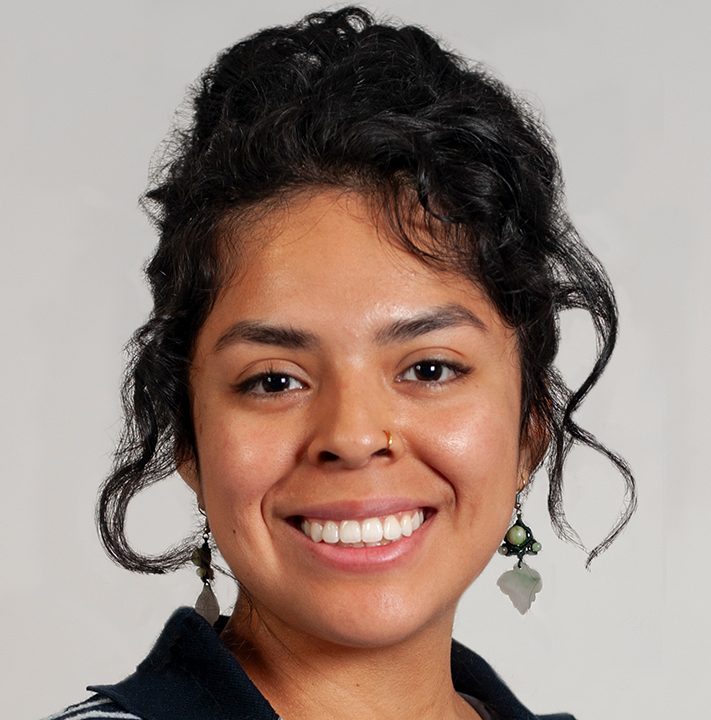
Michelle “Mich” Bartolo-Cruz
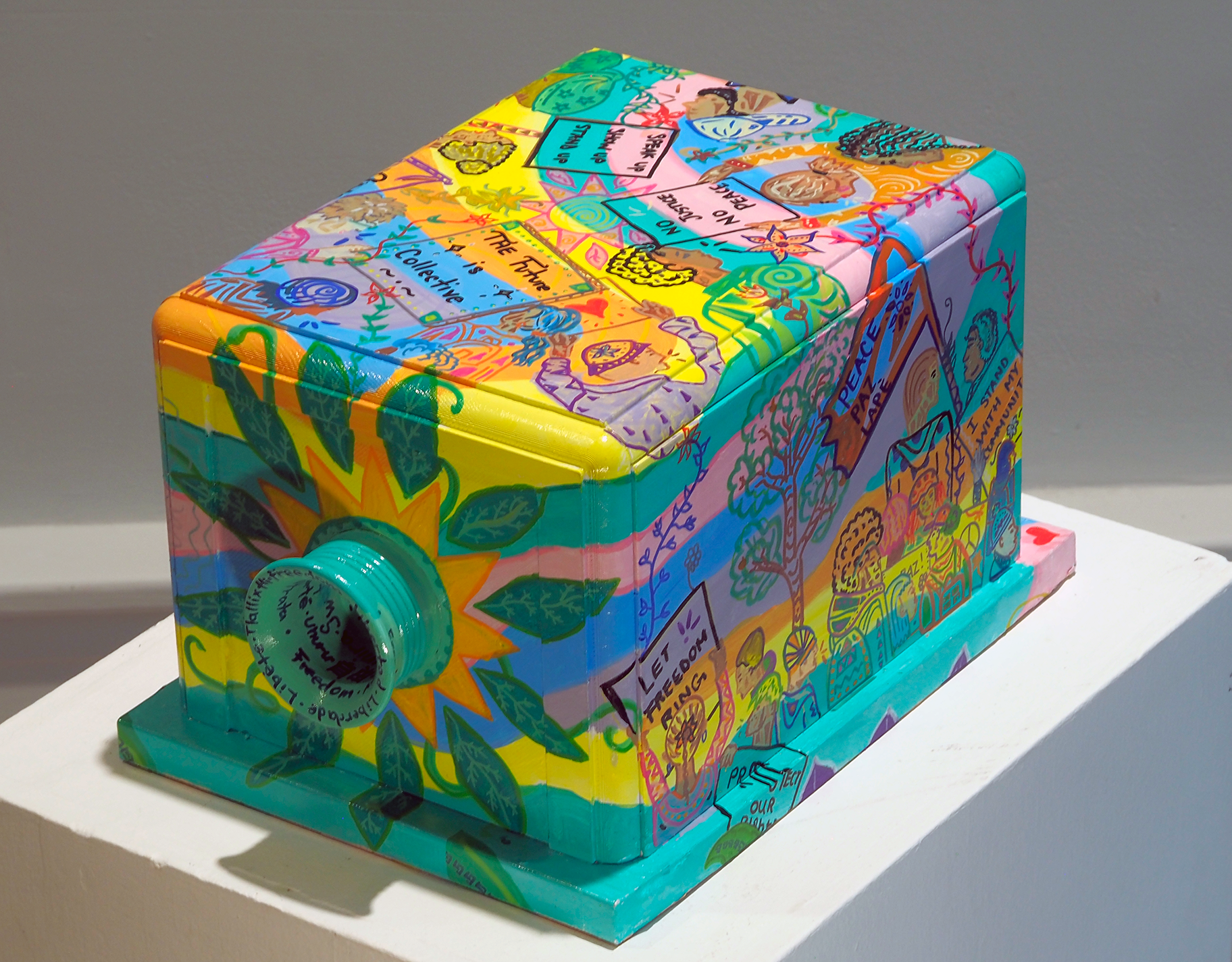
My piece for Foss Park explores the idea of voice as momentum, something that travels, grows, and morphs over time. Inspired by the history of Foss Park as a place of movement and gathering, as well as my own experiences running through the park and participating in protests that begin in East Somerville, I view the telephone as more than a communication device. It becomes a vessel that carries stories, resistance, and collective memory across generations.
Throughout the piece, I incorporate hidden hearts and the words for “freedom” and “love” in multiple languages, reflecting the diversity of the Somerville community and the many voices that contribute to its identity. I use a vibrant color palette to celebrate the energy, resilience, and cultural richness of the neighborhood.
The design draws from organic forms found in nature, particularly the unfolding structure of flowers and the movement of sound waves. Flowing lines and interconnected shapes represent voices spreading, connecting people, places, and histories. Ultimately, the piece reflects how individual voices come together to inspire community action, reminding viewers that the freedoms we experience today are the result of countless acts of courage, advocacy, and collective care of the past.
Historical Background
Foss Park has long been a place where Somerville residents gather to make their voices heard. Located along the route of Paul Revere's ride—reenacted annually along the park's western edge—the site connects Revolutionary-era calls to action with contemporary expressions of civic engagement.
Long before it became a public park, this area was part of a marshy landscape shaped by the Middlesex Canal and later excavated for the clay that fueled Somerville's nineteenth-century brick industry. As the city grew, residents preserved the land as open space, transforming an industrial landscape into a shared public commons.
The park is named for Private Saxton Conant Foss, a Somerville soldier who was killed in action during World War I and posthumously awarded the Distinguished Service Cross and Silver Star for extraordinary bravery. He was the son of Samuel Walter Foss, the celebrated poet, librarian, and civic leader whose writings on character, democracy, and community made him one of Somerville's most beloved public figures. Together, father and son represent different forms of public service—one through words and ideas, the other through military sacrifice.
That tradition of service and civic engagement continues today. Foss Park has become one of the city's most visible stages for public expression. Labor rallies, immigrant rights marches, environmental justice campaigns, peace vigils, and human rights demonstrations have all assembled here, reflecting the changing concerns and aspirations of the community.
From Revolutionary reenactments to contemporary protests, Foss Park demonstrates that freedom is not only remembered—it is practiced. Generation after generation, Somerville residents have come here to assemble, advocate, commemorate, and participate in the ongoing work of democracy.
Michelle Bartolo-Cruz “Mich”
Michelle Bartolo-Cruz “Mich” is a multidisciplinary artist based in Somerville, Massachusetts, with Indigenous Otomí roots from Mexico and ties to Reno, Nevada. As the child of immigrants, her work is deeply informed by themes of community, cultural identity, and belonging. Through painting, sculpture, photography, and public art, she explores the connections between people, place, and history.
Mich’s public art experience includes being a finalist for East Somerville Main Streets' Colors and Shapes of East Somerville project, where her selected work was installed in the neighborhood. She has created community murals, facilitated art workshops in New York City and at Harvard University, and maintains an active photography practice documenting landscapes, community spaces, and everyday moments. Her work often combines vibrant color, symbolism, and storytelling to create pieces that celebrate resilience, connection, and collective memory. @mkbc_art