Jhai James
Artist Statement
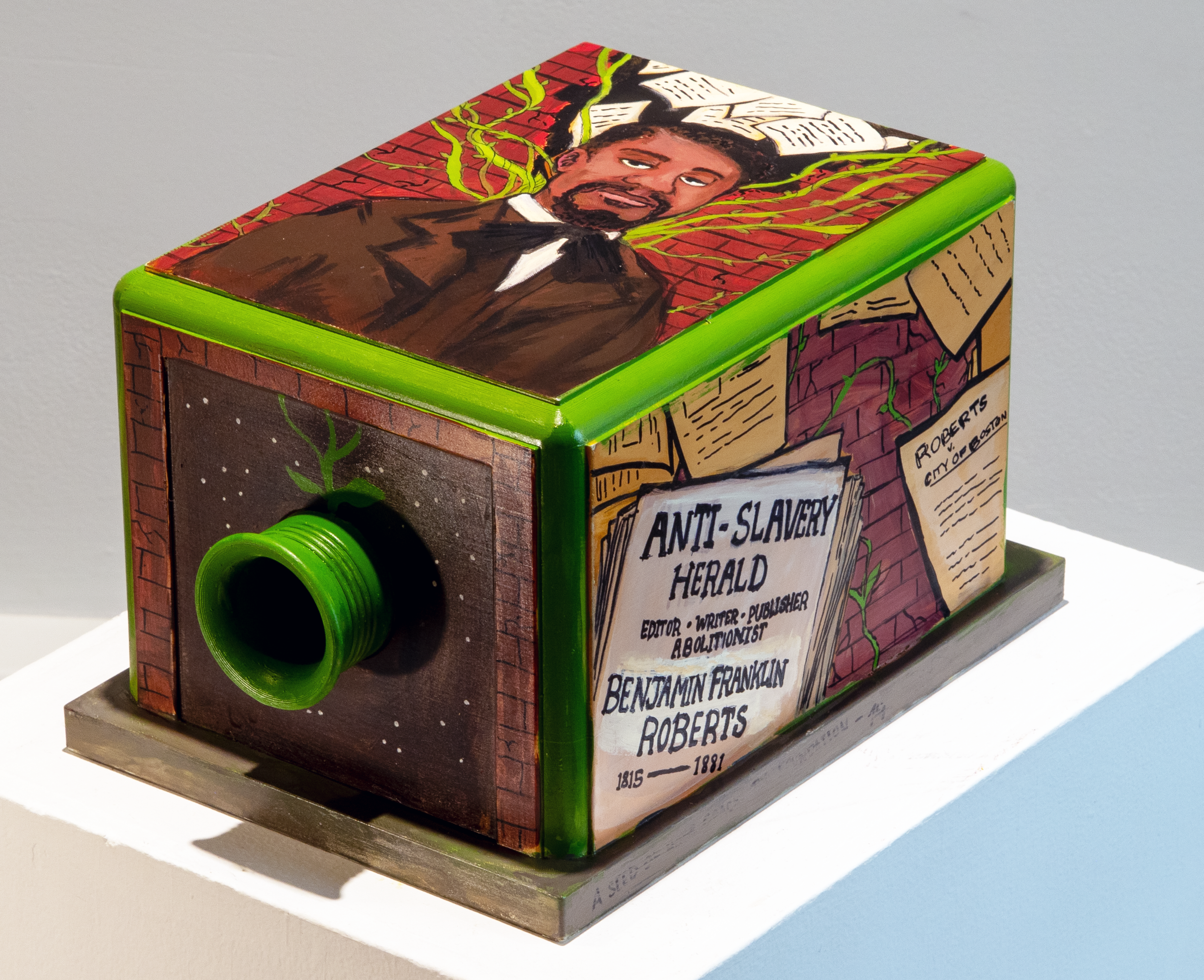
A Seed of Hope Cracks the Foundation
”A Seed of Hope Cracks the Foundation” is inspired by the story of Benjamin Franklin Roberts, a writer, publisher, and abolitionist. Roberts was not merely a proponent of civil rights and integration; he was a cornerstone of the movement to secure equal education and legal protections for African Americans in Greater Boston. As the first Black independent publisher and editor in the United States, and the creator of The Anti‐Slavery Herald, he used his skills and platform to advocate for equal rights and to keep Black citizens informed—and wary—of laws and events that affected their lives, including the presence of slave catchers operating
within the city. Most notably, in 1849, Roberts filed the Sarah C. Roberts v. Boston lawsuit, arguing for equal and integrated education for his daughter Sarah and for the many Black children forced to attend underfunded and under-resourced schools. His case planted the first legal “seed” for school integration, ultimately paving the way for Brown v. Board of Education, which would later deem school segregation both unequal and unconstitutional. The design draws from that seed of change planted by Roberts. It grows into sprawling vines and lush greenery across the box, surrounding the Old State House and cracking its red‐brick foundation. Legal documents and newspapers spread alongside the flourishing plants, symbolizing both the reach of Roberts’s work and the legal precedent his efforts helped establish—instilling hope for a brighter educational future for children like his daughter..
3 - Benjamin Roberts (1815 – 1881) | Abolitionist, Civil Rights Activist
Listen!
Historical Background
Benjamin Franklin Robert was an abolitionist printer and the first African American to edit, publish, and produce a newspaper (The “Anti-Slavery Herald”) in the United States.
Before moving to Somerville, he and his wife, Adeline Fowler, while living in Boston tried to send their daughter to a white school that had a good quality education and was a shorter and safer walk from their home. Roberts was following in the footsteps of his grandfather, James Easton, a revolutionary soldier who declined to classify himself by the racial categories defined by whites. Roberts’ attempts at school choice became the 1848 court case Sarah Roberts vs. Boston, argued by Charles Sumner, well-known white abolitionist, and Robert Morris, the first Black lawyer to win a jury case in America. The court ruled against them and upheld racial segregation in schools, laying the foundation for “separate but equal”. But this decision prompted boycotts, demonstrations and petitions and when Roberts brought the case to the state legislature in 1855, he finally prevailed, and the Massachusetts court passed a law forbidding segregation in public schools. The “separate but equal “doctrine from the Sarah Roberts vs. Boston case was again upheld in the United States Supreme Court Plessey vs. Ferguson decision that cited the Roberts case and legalized segregation throughout the country. The Roberts case was again cited, however, when the Supreme Court finally ruled school segregation unconstitutional in the 1954 Brown v. Board of Education case, which propelled the emergence of the modern civil rights movement.
Jhai James
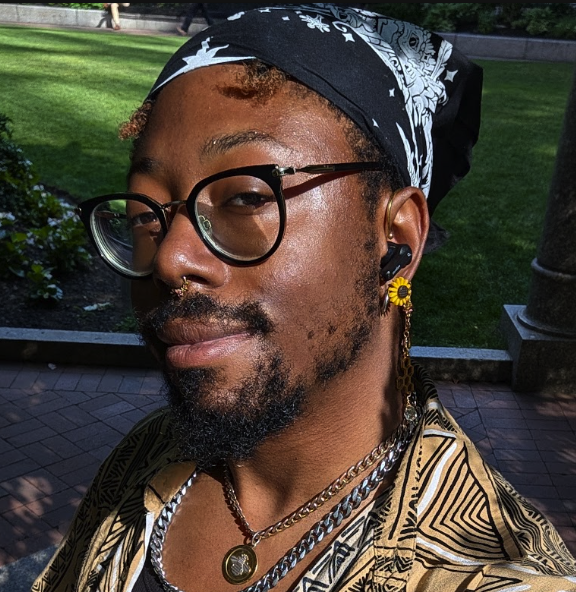
Jhair “Jhai” James has always been surrounded by the arts and has developed a profound love for them. With cousins who dance and play instruments, a grandmother who crafts ornate African quilts, and many other family members involved in creative pursuits, it felt natural for him to cultivate his own passion for creating. Ever since he first picked up a pencil and paper in kindergarten, he has sought to push the boundaries of his creativity and storytelling. As a child, Jhai enjoyed making toys out of pipecleaners. As a teenager, he experimented with larger sculptures and costume design, later exploring traditional painting and pastels. Throughout these artistic explorations, one constant focus emerged: storytelling and identity. Whether crafting narratives in hand-drawn comic books, creating sequential paintings on canvas, or producing animations, he was captivated by the ways in which a person's history, personality, growth, and emotions could be portrayed through visual art.
This dedication to storytelling remained a central theme in his work as he honed his craft at Boston Arts Academy in high school and later at Lesley University’s College of Art and Design. He channeled his love for storytelling into various projects, including creating logos for small businesses, designing characters for illustrative works, and producing murals and outdoor
installations. One of his most significant projects was the “Pieces 4 Peace” nonprofit initiative, which he founded in 2014. This project involved a series of group discussions, art therapy sessions, and community panels to help community members create art reflecting their personal experiences with issues such as racism and street violence.
Today, Jhai works at a hospital clinic and a seasonal booth at King Richard’s Ren Faire, but finds joy in taking on commissions and working on his personal comic projects during his free time. Whenever he can, he participates in local art venues, comic events, and occasionally collaborates on murals with fellow artists from Boston and Somerville.